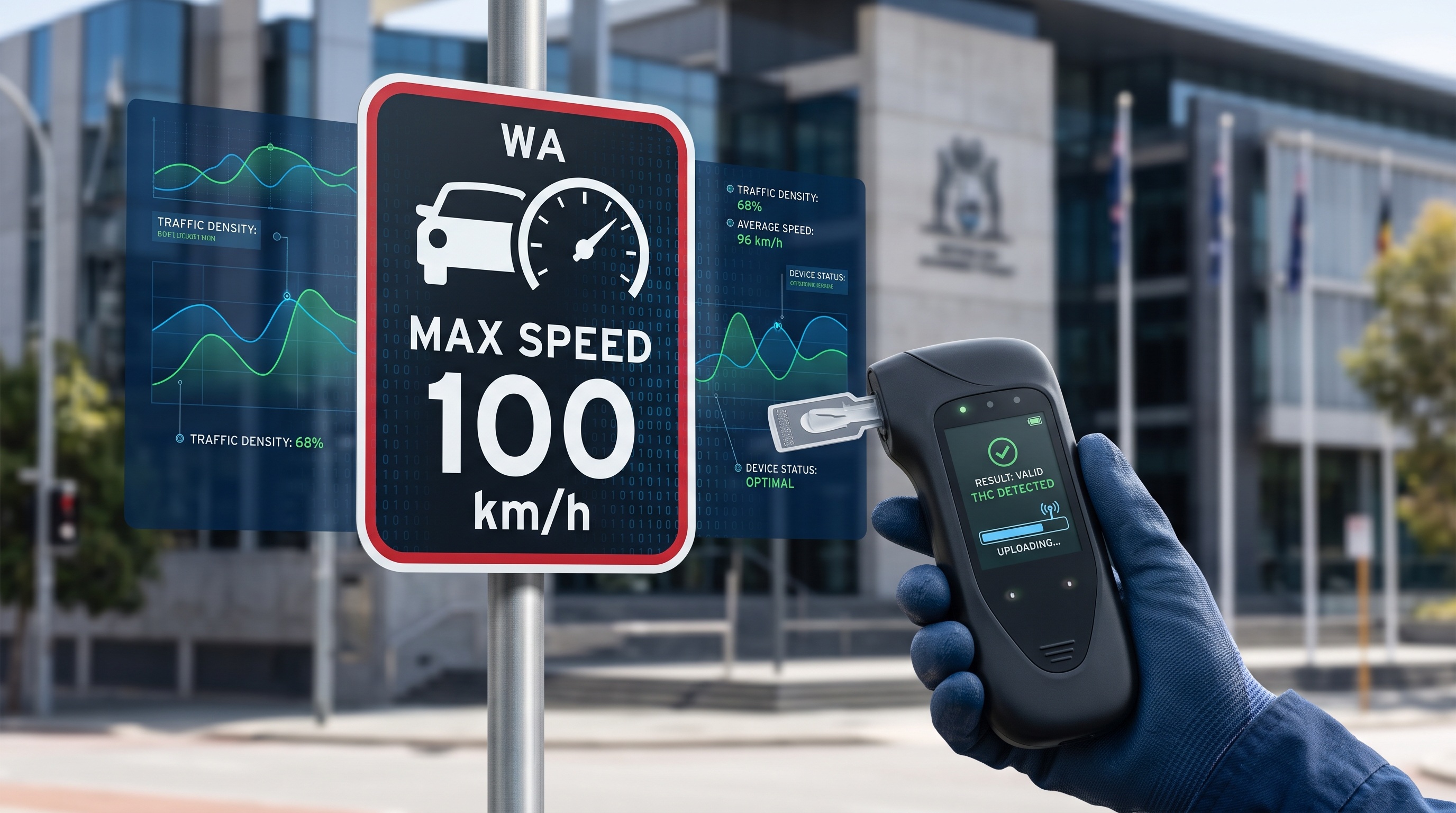
Cocaine Now on the Menu for WA Roadside Drug Tests
Effective July 8, 2026, WA drivers face a significant shift in roadside drug testing, with cocaine officially added to the list of substances police can test for. This regulatory update, alongside broader government access to driver and vehicle data, signals a new era for monitoring and data utilisation in the state.
What happened
The Cook Labor Government, through amendments to the Road Traffic (Drug Driving) Regulations 2026 and Road Traffic (Administration) Regulations (No. 3) 2026, has formalised two key changes. Firstly, cocaine is now an explicitly tested substance during roadside drug screens, with new devices like the SECURETEC DRUGWIPE II TWIN COMBO and SECURETEC DRUGWIPE 3 S COMBO approved for use. Secondly, government departments can now leverage driver's licence, permit, and vehicle licence information for a wider range of purposes, including digital identity verification and the administration of cost of living relief measures. These regulations were published on July 8, 2026, under the Road Traffic Act 1974 and Road Traffic (Administration) Act 2008 respectively.
What this means for you
If you're a WA driver, particularly one who might occasionally indulge, your risk profile just changed. Cocaine testing is now part of the roadside routine, meaning impaired driving enforcement has expanded. If you're a WA government agency administering cost of living relief, you now have expanded data access, potentially streamlining the verification process for eligible recipients. This could mean faster, more efficient delivery of support, but also raises questions for citizens about how their personal data is being shared and protected. For journalists covering policing or privacy, this is a clear signal of evolving government powers and citizen obligations.
Want to follow this thread yourself? Search GovScanner's free dashboard, or connect GovScanner to your favourite AI so your model can explore WA government data for you.
What this means for WA
This dual-pronged regulatory update reflects a government keen on both public safety and administrative efficiency. The expansion of roadside drug testing aligns with a broader trend towards stricter enforcement of road safety. The increased data access, while framed around cost of living relief, sets a precedent for how personal information held by the Department of Transport can be used across government. It signals a move towards greater interoperability of government data, which could lead to more integrated services, but also demands vigilant oversight regarding data security and privacy. This is a clear signal of the Cook Labor Government's approach to leveraging data for policy outcomes.
The numbers
The Road Traffic (Drug Driving) Amendment Regulations 2026 explicitly include cocaine as a tested drug, updating procedures for devices like the SECURETEC DRUGWIPE II TWIN COMBO and SECURETEC DRUGWIPE 3 S COMBO, as detailed in the regulations themselves. Further regulatory changes, the Road Traffic (Administration) Amendment Regulations (No. 3) 2026, expand the purposes for which departments can use driver's licence information, specifically for "administering cost of living relief measures" and digital identity exchange, as seen in the GovScanner record. The approval of specific testing devices, such as the SECURETEC DRUGSWIPE 3 S, is further cemented by gazette notices like the Road Traffic (Preliminary Oral Fluid Testing Device) Notice 2026. This dual action highlights a concerted effort across road safety and data management. For more context on previous discussions around drug testing, note the Hansard entry regarding motions for increased funding for driver impairment testing.
Find your own data
This is just one of thousands of regulations and gazette entries GovScanner tracks each year. Connect the GovScanner API to your own tools, or plug GovScanner into your AI assistant so it can watch WA government data for you. If you just want to poke around manually, the search dashboard is there too.