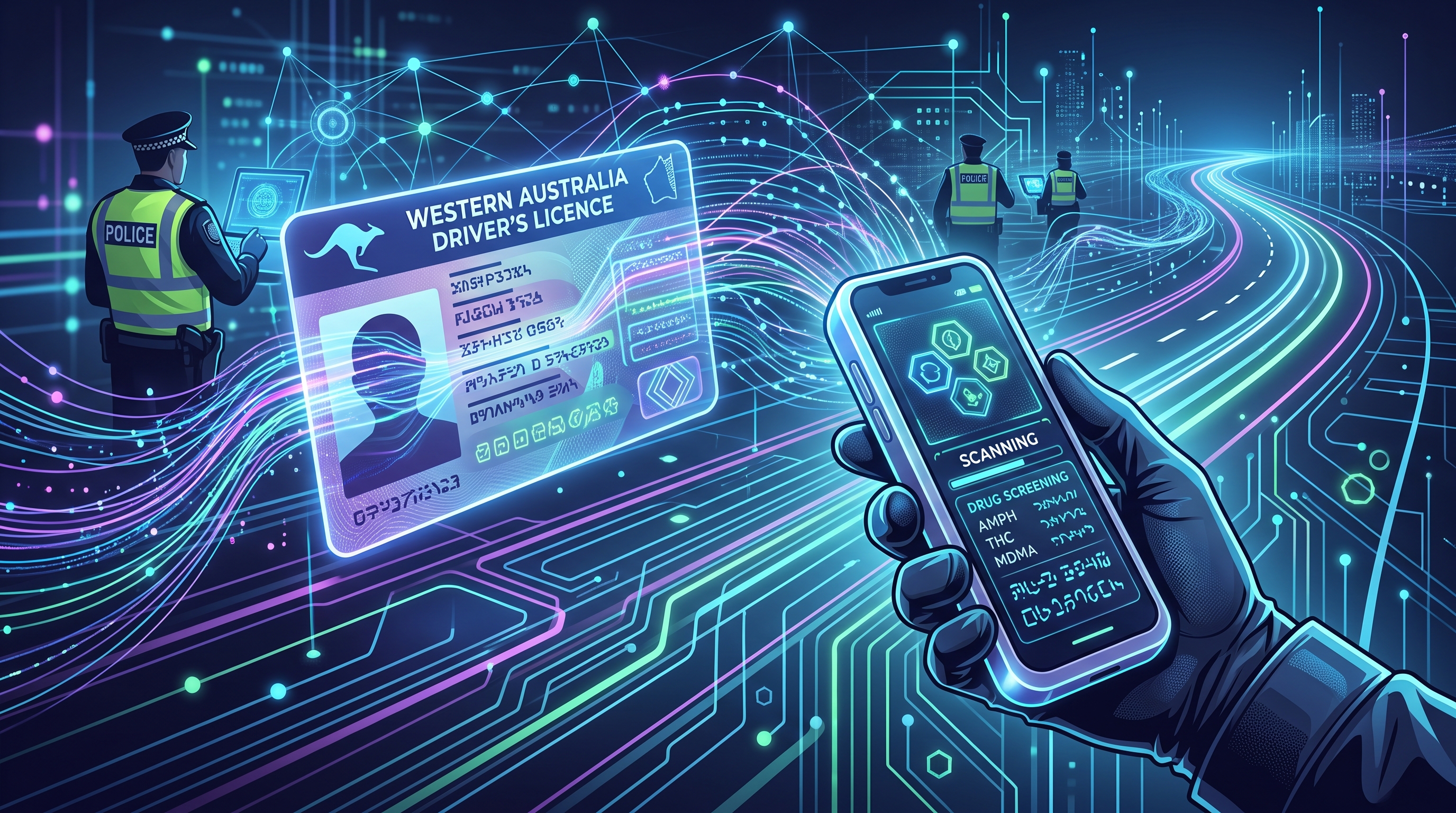
Cocaine Now on the List for WA Roadside Drug Tests
Starting July 8, 2026, cocaine joins the list of substances WA Police can test for at the roadside, a significant update to the state's drug driving regulations. This change, alongside expanded government access to personal driving data, marks a dual shift in how the Cook Labor Government is managing road safety and information use.
What happened
The "Road Traffic (Drug Driving) Amendment Regulations 2026" officially add cocaine to the schedule of drugs detectable during roadside oral fluid tests. Published on July 8, 2026, these regulations also update the specific testing devices approved for use, including the SECURETEC DRUGWIPE II TWIN COMBO and SECURETEC DRUGWIPE 3 S COMBO. Concurrently, the "Road Traffic (Administration) Amendment Regulations (No. 3) 2026" grant broader powers to government departments to utilise driver's licence and vehicle information for purposes like digital identity verification and administering cost of living relief measures.
What this means for you
If you're a WA driver, your risk profile just changed. Not only is cocaine now a target for roadside drug testing, but the government can also share your licence data more widely. If you rely on your licence for employment or simply value your privacy, this expansion of data access means your personal information can be used for purposes beyond traditional road safety, including digital identity exchanges and potentially linking to cost of living relief programs. Compliance with updated road safety laws is now even more critical, and understanding how your data is used becomes paramount.
Want to follow this thread yourself? Search GovScanner's free dashboard, or connect GovScanner to your favourite AI so your model can explore WA government data for you.
What this means for WA
These amendments signal a dual-pronged approach from the Cook Labor Government: a tightening grip on road safety through expanded drug testing, and a broader move towards digital integration of personal data across government services. While the drug testing aims to enhance public safety, the expanded data access sets a precedent for how personal information, particularly from driver's licences, can be leveraged for various administrative functions, potentially blurring lines between departmental responsibilities and raising questions about data governance in a digital-first era. It reflects a trend towards greater interoperability of government data.
The numbers
The "Road Traffic (Drug Driving) Amendment Regulations 2026" explicitly name cocaine as a newly tested substance, expanding the scope of roadside enforcement. This aligns with the approval of new testing devices, such as the SECURETEC DRUGWIPE 3 S COMBO and the SECURETEC DRUGSWIPE 3 S, as detailed in recent gazette notices. Meanwhile, the "Road Traffic (Administration) Amendment Regulations (No. 3) 2026" permit the use of driver's licence and vehicle information for digital identity exchange and cost of living relief, a significant expansion of data utility outlined in the regulations themselves. These changes build on previous moves, such as the WA Police Commissioner delegating drug and alcohol testing authority, as reported in a GovScanner story.
Find your own data
This is just one of thousands of subsidiary legislation changes GovScanner tracks each year. Connect the GovScanner API to your own tools, or plug GovScanner into your AI assistant so it can watch WA government data for you. If you just want to poke around manually, the search dashboard is there too.